
Neuroaffirming practice
A thoughtful, affirming approach that recognises neurodivergence as a strength rather than a deficit.
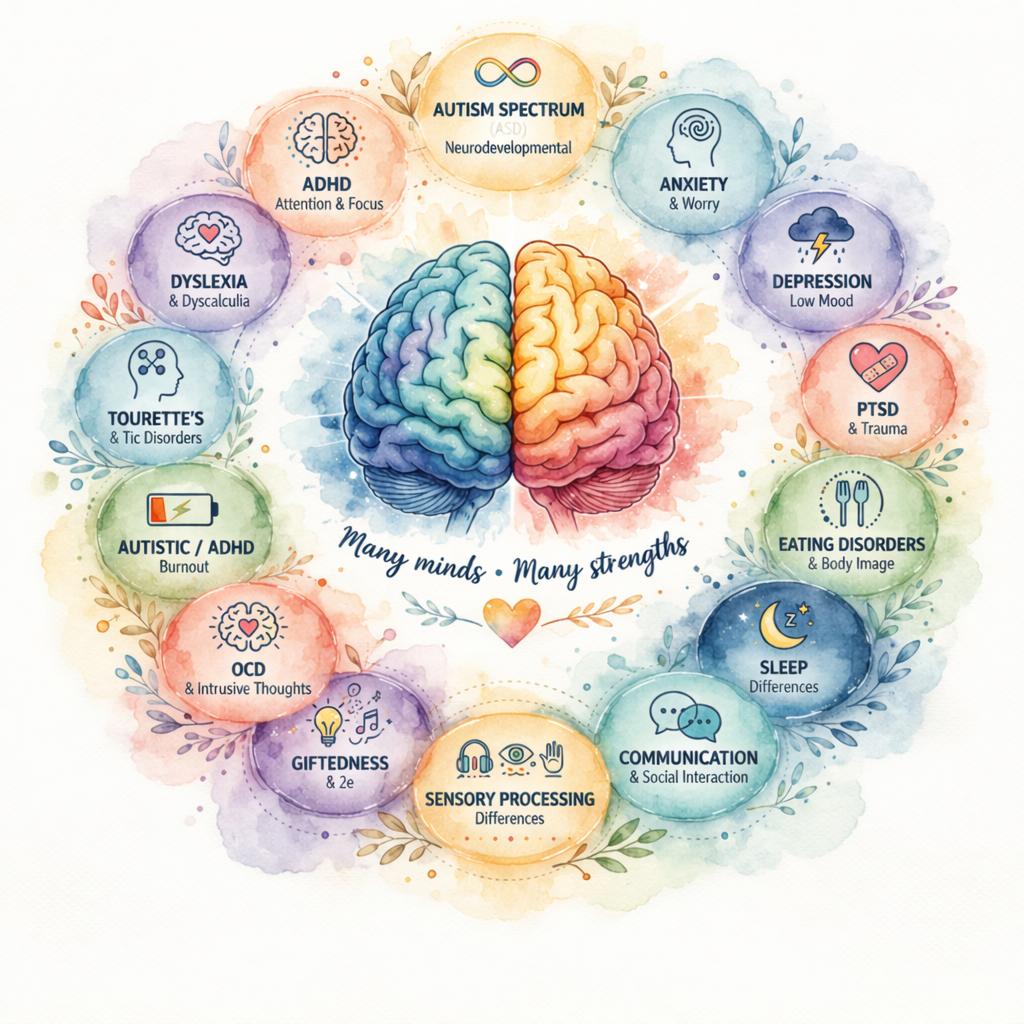
Understanding neurodivergence
Neurodivergent brains process information, emotion, and sensory experience in different ways. These differences can bring both strengths and challenges in everyday life, shaping how a person relates to themselves and the world around them.
Some people come to therapy with an existing diagnosis, while for others this understanding may emerge over time. Although I am trained as an autism assessor, I do not provide formal diagnosis but can help identify relevant traits and guide you towards proper specialist assessment where needed.
I offer support throughout this process, including making sense of experiences, exploring identity, and adjusting to new understanding. I can also support advocacy in education or the workplace, including guidance around reasonable adjustments.
Unmasking
Many neurodivergent people learn to mask their natural responses in order to fit into environments that are not designed for them. This can involve conscious or unconscious effort to appear “typical”, often from a young age.
While masking can help in certain situations, it can also feel exhausting and inauthentic, and over time may contribute to burnout, anxiety, or low mood.
Therapy offers a space where you can begin to feel more authentic, understood, and able to respond to your needs in more sustainable ways.
Mental health
Neurodivergence can increase vulnerability to mental health challenges such as anxiety, depression, and trauma-related difficulties.
These experiences are often shaped not only by internal factors, but by navigating environments that may not recognise or support difference.
Together, we can explore these experiences and work towards realistic, compassionate strategies that support your wellbeing.
Burn out can lead to exhaustion, overwhelm, and reduced capacity. Managing energy, pacing, and self-awareness can help prevent depletion and support improved mental health.
How I work in a neuroaffirming way
I aim to create an environment that adapts to you — your communication style, your pace, and your individual needs. Our work is collaborative, flexible, and shaped around what feels most manageable and helpful.
- Affirming, not fixing — supporting self-acceptance, authenticity, and realistic change
- Space to unmask — without pressure to perform or conform
- Adjusting pace and structure so sessions feel clear and manageable
- Communicating in ways that suit you, including clarity, directness, and checking understanding
- Sensory-aware support, with flexibility to make the environment more comfortable
Support within the family
Every child and family is unique, with their own strengths, needs, and ways of relating. Supporting a neurodivergent child can feel both deeply meaningful and at times challenging.
A tailored, understanding approach can help create an environment where children feel supported and able to thrive.
Support may include
- listening closely to your child and noticing their preferences and needs
- building understanding of neurodivergence and how it shapes experience
- developing patience and confidence when navigating challenges
- celebrating strengths and small achievements
- creating a supportive home environment and working collaboratively with other professionals
- recognising your role as the expert on your child, and building on your existing knowledge and care
Thinking about support?
If you are exploring neurodivergence for yourself or your child, you are very welcome to get in touch. We can think together about what support might feel most helpful.